The European Nightcrawler. How to identify Eisenia hortensis. AKA European Red Wiggler
This post is part of a series on worm identification. Click here to see first page. The european red wiggler worm, Eisenia hortensis , formerly know as…
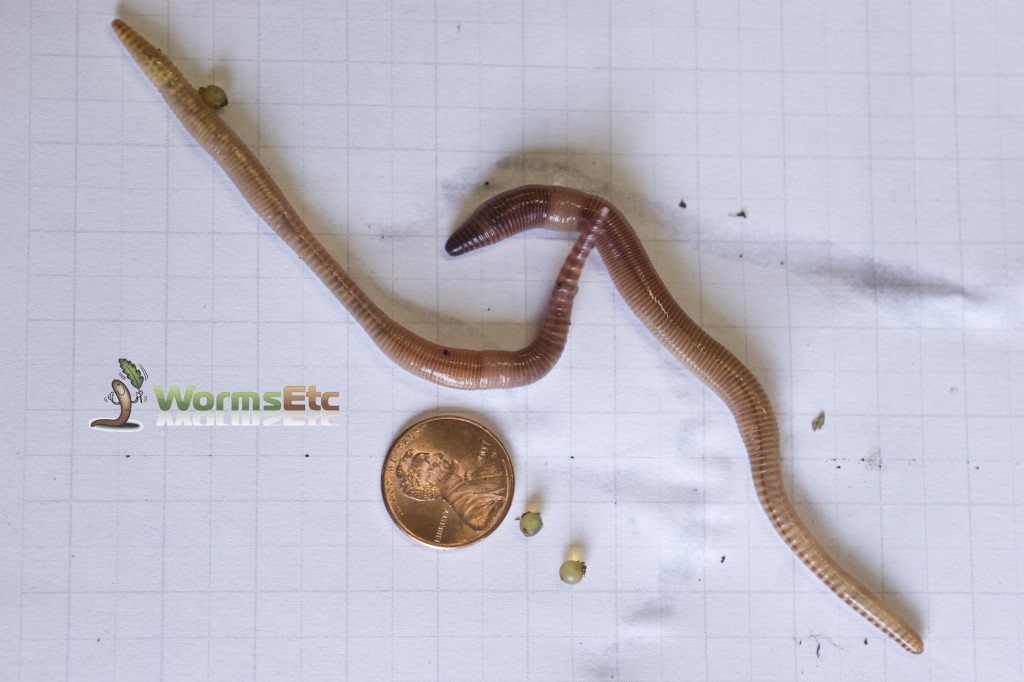
European nightcrawlers are the worm Worms Etc ultimately specialised in. They are a true composting worm, living and feeding in organic matter like red wigglers do, but they grow to two or three times the size. That size makes them a genuinely good fishing worm, and because they tolerate cooler conditions they do better in outdoor beds through a Southern winter. “European red worm” and “super red” are the same animal under different trade names.
Look for a thicker, paler worm than a red wiggler, pinkish to purplish grey rather than deep red, with a body that tapers to a flattened, paddle-like tail. They are less banded and less frantic when handled. Juveniles can be hard to tell from red wigglers until they outgrow them. The identification post walks through the differences with photos, and the two comparison posts (part one and part two) cover behaviour, breeding and which to choose.
Europeans like a slightly deeper and cooler bed than red wigglers, and they are more sensitive to a bin that runs hot or dry. They do very well in bedding with some structure to it, such as aged leaves, shredded cardboard and coir, and they appreciate a heavier feeding of grain-based worm chow if you want size for bait. In our experience they stay put better than red wigglers when a bed is disturbed. See composting with European nightcrawlers for how we ran them.
They are slower to multiply than red wigglers. Cocoons are larger, hatch fewer worms, and take longer. On a farm that means a bigger breeder stock to produce the same weekly harvest; in a home bin it simply means patience. Once a bed is established the population is stable and easy to keep going.
By 2015 the farm had moved to Europeans exclusively. The post announcing the switch explains the thinking: one worm that served composters and anglers alike, that handled the heat in our beds, and that customers kept asking for by name.
Availability. Worms Etc is not shipping european nightcrawlers right now. The farm is coming back gradually; email Matthew@wormsetc.com to hear when they are.
This post is part of a series on worm identification. Click here to see first page. The european red wiggler worm, Eisenia hortensis , formerly know as…
The European red worm is great for composting and is quite a hardy worm in my experience. One major difference is the euro's tendency to burrow much deeper.
Both worms can be used as a composting worm but what are the differences and which one will work the best in a given scenario.
I am often asked the practical difference between Euro's and red wigglers when it come to composting. There are some differences between the Euro and the red…
Well the greenhouse is dried in and almost complete. Just need end walls on it, but I don't see much point in adding them until next winter since spring is…
Dear customer, I am excited to announce that after many years of worm farming and experimentation that the european red worm has proven to be a great…