
Beginner's Guide to Getting Started with Red Worms
In this blog I am going to teach how to set up a “worm bin.” Anyone can learn how to do this and its great fun for children so have them help also. Wait until…
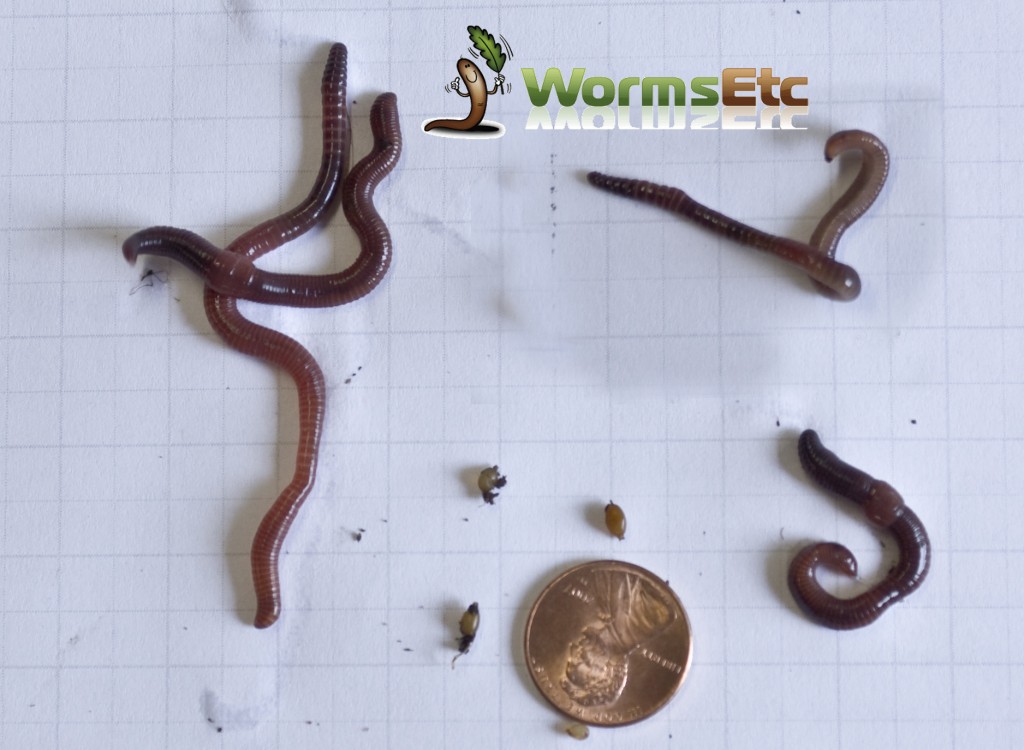
Red wigglers are the worm almost everyone starts with, and for good reason. They live in the top few inches of decaying organic matter rather than burrowing in soil, so they are perfectly suited to a bin. They eat a lot for their size, a well-run bin can process roughly half the worms’ weight in food scraps a day, and they reproduce quickly enough that a pound of worms becomes a thriving colony within a season.
Red wigglers are small, two to three inches as adults, reddish brown with faint yellow banding between the segments (hence the nickname “tiger worm”). The tail tip is often yellowish. Adults carry a raised, lighter-coloured clitellum (the saddle) about a third of the way back from the head. When handled they wriggle hard and may release a little yellowish fluid with a distinctive smell, which is where fetida comes from. The identification post has photos, and this comparison sets them beside European nightcrawlers, which are often sold under confusingly similar names.
They want three things: moist bedding (shredded cardboard, paper, aged leaves, coir), food buried in the bedding rather than piled on top, and temperatures that stay out of the extremes. They tolerate crowding well, which is why a compact bin works. Drainage and airflow matter more than volume. If the bin smells, it is usually too wet or overfed, not too full.
The beginner’s guide covers setting up a first bin step by step, and the bedding post compares every bedding we tried on the farm.
Under good conditions red wigglers are prolific. Each cocoon holds several hatchlings, and a mature worm can lay a cocoon every few days. Warmth, moisture and a steady food supply speed things up; cold or dry bins slow them to a crawl. We wrote about what we saw in our own beds in earthworm egg capsules and red worm reproduction.
Worms Etc raised red wigglers from 2009 until 2015, when the farm switched to European red worms only. The reasons are in that post; the short version is that the larger worm served both composting and bait customers and handled the South Carolina summers better in our outdoor beds. For an indoor kitchen bin, red wigglers remain the easiest worm to succeed with.
Availability. Worms Etc is not shipping red wigglers right now. The farm is coming back gradually; email Matthew@wormsetc.com to hear when they are.
In this blog I am going to teach how to set up a “worm bin.” Anyone can learn how to do this and its great fun for children so have them help also. Wait until…
This post is part of a series on worm identification. Click here to see first page. Eisenia fetida is the common red wiggler. It is the most common worm sold…
Both worms can be used as a composting worm but what are the differences and which one will work the best in a given scenario.
Bedding has a huge impact upon how quickly worms grow and ultimately upon the maximum size that they will obtain. Also it plays an important role in…
Earthworms lay egg capsules in the soil usually near a good source of food. The neat thing about theses egg capsules is there ability to survive harsh ...
Dear customer, I am excited to announce that after many years of worm farming and experimentation that the european red worm has proven to be a great…


