We live and learn part two
Continued...
So now I have this worm bed with hundreds of dollars worth of worms and countless poor souls on the line, what to do? Well, following the advise of others I added lots of peat moss and mixed it in with the bedding in order to dilute the food waste. This was a lot of work and I am not sure how much it helped.

The worms that were still alive are now definitely more dispersed and harder to find. This may be due to them dying because as soon as they die they decompose thus also becoming part of the problem by adding more protein to the system. Seeing that this did not solve the problem I spread lots of lime to the top of the bedding and then liberally watered the bed to wash the lime in. This did really seem to help. The worms left were definitely more lively the day after adding lime. The thing is that it seems to have a temporary affect, so now I add lime often, as the worms seem to act favorably towards it. This also increases the agricultural value of the casting by making it a better buffer. Despite my efforts it still seems as I am loosing more worms every day in this bed. I think I am going to add lots of pulverized paper fiber tomorrow and see what effect this has. On the bright side my experimental heating and insulation scheme seems to be working nicely. I will blog on that soon.
Thanks for reading,
Matthew Wilson
Worms Etc
Related posts
Worm Bin Problems
By popular request here is an index that will help you find answers to any worm bin problems you are having.
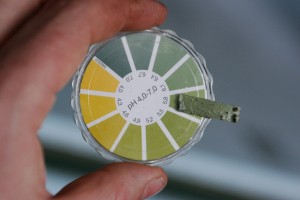
Worm bin pH, testing and adjusting.
How to prevent sour crop by using pH litmus testing and using crushed limestone to correct and acidity. This helps keep mite and other critters at bay as well.
Red Wiggler Worm farming in the heat.
"How hot can my worm composting bin get without killing the red wigglers?" That is a question I have been getting lately. Worms can actually survive quite high…